

Irish Whiskey is enjoying its greatest revival.
In a world that keeps getting smaller every year, you’re hard-pressed to find yourself far from an Irish pub, wherever you happen to be standing. Stuck in Manila? I can point you to a great Paddy bar. Same for Reykjavík, Rome, Bordeaux, Guadalajara, Munich, Brussels, Hong Kong — just about anywhere that tolerates the fine art of drinking.
The Irish pub is the world’s friendliest and most covert church, and its flock congregates daily. Irish Whiskey is an essential part of the doctrine — not just in Irish pubs, either. Every bar worth its salt carries it, and the category offers something for every mood, from a quickly downed shot to a slowly savored pour of 12-year-old Pure Pot Still.
Whiskey and Ireland are inseparable. This is Whiskey’s birthplace — though some will dispute the claim. Ireland rose to become the world’s top Whiskey maker, fell from that height about as hard as a spirit ever has, and, as luck would have it, is now in the middle of writing its comeback.
The History of Irish Whiskey
Until recent memory, every one of Ireland’s great Whiskey brands came out of just three distilleries — and for a stretch between 1966 and 1987, only two. That collapse, and the long climb back from it, is the whole story. It stretches back more than a thousand years, and it’s worth telling properly.
There’s evidence that nomadic monks made their way to Irish shores in the sixth century, bringing rudimentary distilling skills with them — used at the time mostly for medicines and perfume, not drinking. In the eleventh and twelfth centuries, Irish monks returning from the Mediterranean brought back the knowledge to distill potable spirits. The Mediterranean had grapes to spare; Ireland didn’t, but it had grain and crude beer, and either would do. Eau de vie — water of life, usually made from fruit — became uisce beatha in the local tongue. Anglicized, that’s Whiskey. A spirit was born.
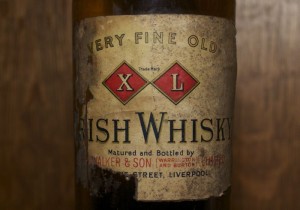
Whiskey turns up in Irish literature by the early fifteenth century, and The Red Book of Ossory mentions it by the sixteenth, though at that point it was still largely the province of religious orders. By the Tudor period, it had become a drink for every class, not just the elite — good enough that Russian Czar Peter the Great is said to have called it “the best of all the wines.”
By the seventeenth century, Whiskey-making had spread far enough that farmers were routinely distilling their surplus grain — a bushel of grain is bulky and perishable, a bottle of whiskey is neither, and it doubled as a topical disinfectant and the base for herbal tinctures against practically anything that ailed you. The Crown noticed, and by 1661 had taxed Irish Whiskey, which kicked off a long-running game of dodging customs and excise men. Tax avoidance, it turns out, is exactly as old as taxes.
By the eighteenth century, demand for Irish Whiskey was high enough that a duty on registered stills pushed most distillers underground rather than out of business — by one estimate, more than 800 of them. In 1822, Ireland counted just 40 officially registered distilleries; the crackdown cut that number in half within the year. Sanity arrived in the form of a new law taxing the spirit actually produced rather than the still itself, and licensed distilleries grew past 90 within about a dozen years. It was during this same stretch that Aeneas Coffey — an Irish excise man, which is either ironic or exactly as it should be — patented the column still, building on a Scotsman’s design. Irish distillers wanted nothing to do with it. The Scots loved it, and that decision would cost Ireland dearly a few decades later.
By 1900, Ireland had more than 100 Whiskey distilleries, Dublin was the epicenter of the trade, and the country was selling the equivalent of 12 million nine-liter cases of Whiskey a year — the golden age, and no nation loved the stuff more than the newly Whiskey-mad United States.
Then the wheels came off, and fast. The Scots’ column stills could turn out Whiskey more cheaply than Ireland’s pot stills could match, and by 1910, the market was oversupplied. The 1916 Easter Rising landed in the middle of a World War, already diverting Irish barley to the war effort. When that war ended in 1918, the United States — Ireland’s best customer — went dry with the 18th Amendment, and Ireland spent Prohibition’s fourteen years fighting a war of independence (1921) and then a civil war (1922–23) of its own. When American Prohibition finally lifted, the Crown’s trade embargo on Irish goods was still in force, locking out Canada, South Africa, Australia, New Zealand, and the UK itself — roughly a quarter of the world’s shipping ports, gone at a stroke.
In three decades, the industry that had been the envy of the world was all but finished. Six distilleries were left by 1953, four by 1966, and then two, once Jameson, Powers, and Cork Distillers merged into Irish Distillers, leaving just Bushmills alongside them. For the next twenty-plus years, every drop of Irish Whiskey sold anywhere in the world came out of those two distilleries — for a time, both owned by the same multinational.
Then, in 1987, John Teeling opened Cooley Distillery in County Louth, and Ireland’s hundred-year drought of new Whiskey makers ended.
Irish Whiskey Evolves
Cooley’s slow, hard-won success breathed life back into a nearly dead industry. As late as the 1990s, Ireland still made every drop of its Whiskey in just two distilleries — Cooley made it three. The turnaround, when it came, was dramatic: Ireland had sold 12 million cases in 1900 and had fallen to just 400,000 by the mid-1970s, but Irish Whiskey exports climbed 220 percent between 2002 and 2012 alone. In 2012, Cooley — by then Ireland’s only independent distillery — was sold to the drinks giant Beam. John Teeling had turned a County Louth potato-spirits operation into one of the world’s most respected Whiskey distilleries. He was not about to go quietly into retirement, and neither, it turned out, was anyone else who’d watched him do it.

That sale set off Ireland’s second Whiskey boom. As of today, there are at least 50 working distilleries producing Whiskey in Ireland, with more in planning and development — up from three as recently as the 1990s. (Link: see our complete, regularly updated roster of Ireland’s working Whiskey distilleries.) Most of the newest arrivals are still waiting on their casks; Irish Whiskey must rest for a minimum of three years before it can be called that, and the best of it for considerably longer. Don’t panic — it’s on the way, and there’s already a long list of releases from the first wave of this revival worth seeking out now.
Irish Whiskey exports passed one billion euros for the first time in 2022, and it’s genuinely hard to say where the ceiling is, with new distilleries launching every year and Whiskey laid down a decade ago finally coming of age.
What’s with the “E”?
Scotch Whisky has no “e.” Irish Whiskey does. Theories abound — including the cheeky suggestion that the Scots were too frugal to buy the extra vowel — but the most credible explanation dates to the mid-to-late 1800s, when Scotch brands flooded the market with cheaply made Whisky and Irish producers adopted the extra letter to set themselves apart. That competitive pressure is long gone, but the spelling stuck. Canada, Japan, and Wales generally follow the Scottish spelling; the US uses both. Either way, the extra vowel tells you nothing about quality or style — don’t read into it.
Defining Irish Whiskey
By law, Irish Whiskey must be aged in wood casks for at least three years and bottled at a minimum of 40 percent alcohol by volume. Most of Ireland’s malt Whiskey is triple-distilled — Cooley is the notable exception, sticking with a double pot-still distillation — and as in Scotland, Irish distillers overwhelmingly favor used casks. Most of those come from the United States, since Bourbon and Tennessee Whiskey makers are legally required to use new ones. It’s a tidy, beautiful bit of symbiosis: American oak does its first job on Bourbon, then crosses the Atlantic for a second career shaping Irish Whiskey.
The Irish distillers, like the Scots, also utilize discarded casks from Spain that were first used to mature Sherry. The Sherry cask-finished Whiskey craze hit Ireland later than Scotland, but has now become commonplace.
Types of Irish Whiskey
Blended Whiskey accounts for the largest volume by far — a combination of grain Whiskey and malt Whiskey.
Grain (Single Grain) Whiskey is most often made from maize, produced in column stills and aged in casks, typically ex-Bourbon.
Malt (Single Malt) Whiskey is made from malted barley — the same grain behind the world’s great beers — distilled in pot stills and considerably weightier than grain Whiskey. “Single,” attached to either malt or grain, means the Whiskey was made entirely at one distillery.
Irish Pure Pot Still Whiskey works like malt Whiskey, using malted barley in a pot still, but adds unmalted barley to the mix — a style unique to Ireland that grew out of a reaction to the Crown’s 1682 malt tax. Look for it labeled “Single Irish Pot Still Whiskey,” which again signals one distillery, start to finish.
Enjoying Irish Whiskey
Irish Whiskey is genuinely versatile — built for cocktails, especially the blended styles, but just as at home poured neat and sipped slowly. Pure Pot Still is the connoisseur’s choice, though there’s no shortage of excellent premium blends and single malts worth your attention either way. If you want to see the current landscape for yourself, the Irish Whiskey Association launched The Irish Whiskey Way in late 2025 — the definitive resource for planning a distillery-hopping trip through the Emerald Isle.
There has never been a better time to jump into Irish Whiskey.
Subscribe and never miss any of our new content, and get enrolled as a BevX insider for free.
Do you want to better understand Whiskey? May we suggest Be A Beverage Expert (BABE), a guide to understanding wine, beer, spirits, and cocktails.
Great article, and what a story to tell so much so that following my retirement I’m inspired to tell my the story of Tommy Roche my granduncles who before leaving Ireland took the Fr. Matthew Temperance Pledge before joining Chicago PD. He was the 1st to arrest Capone on arrival from NY and later saved Capone from execution by colleagues. He then became the bane of Capone and the Mobs during Prohibition. Then nearing his end Capone who admired & hated Roche in equal measure, saved Roche from execution! You couldn’t make it up. Working title ‘Prohibition Pledge’ hope to get published for launch in 2020 the centenary year.
Thanks for the comment.