
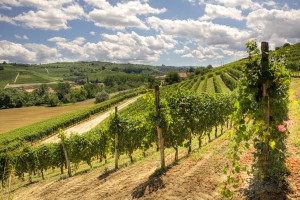
If I were forced to drink wines from just one nation for the rest of my days, I would, without hesitation, choose the wines of Italy. Luckily, I don’t have to make such a choice, but if I were forced, the decision would be an easy one.
The wines of Italy are incredibly diverse in every respect. If you like wine, there is an Italian wine for you (likely dozens of wines). Old and new winemaking techniques utilizing grapes seldom seen outside of Italy conspire to create wines like no others.
Italy’s 20 regions, from north to south, including the island, produce wines of distinction. You can find dry and sweet, sparkling wines made using the Champagne (classic) method, as well as cheap and cheerful Prosecco, incomparable whites, and red wines ranging from simple and quaffable to magically complex.
In the North, you can find white wines that are every bit as crisp and sleek as anything found in Austria and Germany, and in the South, you will be treated to reds as lush and juicy as any Australian Shiraz. Again, if you enjoy wine and don’t have a favorite or a set of favorite Italian wines, you should do some further exploration.
It’s essential to remember that Italy was not unified as a nation until 1861. Before unification, Italy was a collection of sovereign and often unfriendly states, each with a unique language, culture, cuisine, and distinct wines. Not until the post-World War II period was the Italian language officially used in every region. Every part of daily life was tied to the regional state. Their cuisine drew on the land and the sea, and their wines on the omnipresent vines that grew natively or had been introduced long ago by the Romans, Greeks, or Etruscans.
Like the French with their AOC and the Spaniards with their DO, the Italians also have their own set of regulations, known as Denominazione di Origine Controllata (DOC). These rules govern the grape varieties permitted for use within a particular DOC, as well as minimum alcohol levels, aging requirements, and, in some cases, maximum grape yields per acre. The Italians created their DOC appellation system in the early 1960s and made many modifications over time. A significant revision in 1980 created the DOCG category, which is reserved for the highest quality wines, and later, the IGT was created to recognize quality wines that did not fit into existing DOC rules but were clearly superior to Vino da Tavola (VdT) wines, which is a base classification for simple table wines.
It is not at all cynical to suggest that the IGT classification is, in fact, the “Super Tuscan” rule.
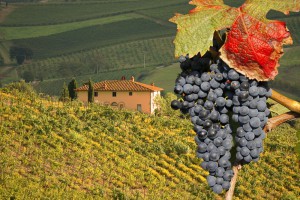
What are Super Tuscans? Many Italians would ask the same question, as this is very much an Anglo term used by wine writers and merchants since the late 1970s and popularized in the 90s and beyond. The term was coined because Tuscan wine producers were making a number of high-quality wines with hefty price tags that did not conform to DOC rules. By law, these wines had to be labeled as VdT (table wines), which was a bit farcical, as all recognized these simple table wines as being some of the greatest wines made in Italy.
Famously, Sassicaia, produced by Tenuta San Guido, is considered the first Super Tuscan, with its first commercial release in 1971. Sassicaia is a Bordeaux-style wine (made with Cabernet). Eventually, the rules committee established the Bolgheri DOC in 1994, and Sassicaia was granted its own DOC the same year.
Most of the world’s winemakers would have conformed in order to use the famous appellation names on their labels, but the Italian winemaker is a different breed. The constantly changing set of regulations and appellations in Italy is significantly formed by the passion and stubborn nature of the Italian winemaker who frequently strives to produce the best he or she can, damn the regulators if need be.
The best way to approach Italian wines is by region, as each region offers unique wines. Examining all 20 regions today would be overwhelming, but how about the highlights of six regions?
Let this be your starting point, and don’t be discouraged if mastering the subject proves to be tricky. Many professionals in the wine industry are somewhat confused by the vast number of wine zones and grape varietals. After decades of digging into Italian wines, I learn new things every month.
Six Italian Wine Regions Presented from North to South
Piedmont is the home of the world-famous appellations of Barolo and Barbaresco. These wines grace the wine lists of the world’s finest restaurants and occupy space on every wine lover’s top shelf. Both Barolo and Barbaresco are made solely with Nebbiolo, one of the great noble grapes. These wines are among the finest made in the world and among Italy’s most expensive. Barolo and Barbaresco are best cellared in their youth, as they often conceal their depth and character.
While Nebbiolo is all glitz and glam, Barbera is Piedmont’s heart and soul. Barbera is both fruity and rustic, with prominent earth and herbal notes. The styles vary widely depending on soil type, temperature, and sun exposure. The cooler the zone, the more austere the wine, while hotter temperatures create bigger, jammy wines.
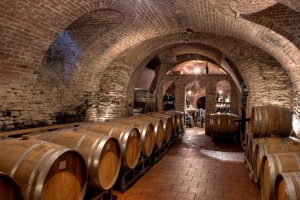
The third most crucial red varietal in Piedmont is Dolcetto. It is the most delicate of the three, characterized by lower acidity and firm tannins. Arguably, the best Dolcetto is made in the DOCG zones of Dogliani and Dolcetto di Diano d’Alba.
While certainly secondary to the reds, Piedmont does produce some delicious white wines. The charming and lush wines made from Arneis are most familiar to export markets. Most famously, the DOCG of Roero produces Arneis with exotic fruit flavors that are best enjoyed by the young. The second notable white wine is made from Erbaluce and is best known as Erbaluce di Caluso. Erbaluce produces crisp wines with a generous dose of acidity and flavors of green apple, citrus, fresh herbs, and bright floral notes.
Veneto, in the eyes of the world traveler, is home to Venice, the charming city of islands linked by canals and bridges. There really is nothing like Venice, and it should be on everyone’s bucket list. The wine lover has another reason to visit Veneto, even if it’s from their own kitchen. Veneto offers superb red, white, and sparkling wines. In summary, there are 14 DOCG zones in Veneto, ensuring a wealth of high-quality wines are available in the Northeastern Italian region.
Red wines are king here, but white and sparkling wines are certainly famous and are not to be missed. Chief among whites is Soave, a bright and deceivingly complex wine made from the ancient Garganega grape, which is grown nearly exclusively in the Veneto region. Do you want bubbly? There is hardly a wine drinker on the planet who has not heard of Prosecco, the cheap and cheerful sparkling wine made from the Glera.
Veneto’s greatest red is Valpolicella, in all its glorious forms. Valpolicella is made primarily with Corvina. Corvina produces wines with bright flavors of blackberry and cherry, complemented by herbal and mineral notes. The Valpolicella DOC offers a superb example of what Corvina can be. A specialty version of Valpolicella, Valpolicella Ripasso, is produced by combining finished Valpolicella wines with the still-active, unpressed grape skins used in Amarone della Valpolicella DOCG. The most noble expression of Valpolicella is Amarone della Valpolicella. Amarone is made from grapes that are partially dried, which intensifies the alcohol and flavor. These wines can age for decades and are among the most coveted wines in the world.
Tuscany is a picturesque region with rolling verdant hills, jutting hill towns, and, of course, vineyards. Tuscany is home to Italy’s best-known wine export, Chianti. Thanks to years of filling export markets with uninspiring wine, Chianti earned a reputation as being cheap and ordinary. Nothing could be further from the truth, as Chianti is one of the world’s great red wines. Chianti is made primarily with Sangiovese, Italy’s most planted varietal and Tuscany’s signature grape.
Sangiovese is one of the world’s noble red grapes. In addition to Chianti, it is responsible for most of Tuscany’s great reds, such as Brunello di Montalcino, Vino Nobile di Montepulciano, and Carmignano, among many others. Among these, Brunello is king, commanding the most fantastic prices while still being a relative bargain among the world’s greatest red wines. Brunello di Montalcino is made in the vineyards surrounding the hillside town of Montalcino. The DOCG zone is relatively small, and most producers produce less than 3,000 cases of Brunello a year.
Like Brunello, Vino Nobile di Montepulciano is produced in sloping vineyards surrounding the hillside town of Montepulciano. In fact, the vineyards must be at a minimum elevation of 250 meters. The DOC was established in 1966 and rightfully elevated to DOCG when that quality designation was created.
Of course, there are also white wines made in Tuscany, chief among them being Vernaccia di San Gimignano DOCG. As the name suggests, the wines are made from Vernaccia in and near the hill town of San Gimignano. These wines are crisp and fruity, with great mineral notes and bright acidity.
Abruzzo, just east of Rome along the Adriatic, is known as the “greenest” region in Europe, as one-third of its land is national and regional parks that are home to rare species of birds, wolves, and bears. It’s also home to one of Italy’s most congenial wines, Montepulciano d’Abruzzo. Montepulciano is a great and versatile red varietal grown throughout central and southern Italy. It is pleasingly fruity with bright cherry notes, but well-made examples also feature a slightly rustic note of dried berries, fresh herbs, and exotic baking spices. Montepulciano d’Abruzzo is one of the rare wines that delights both novice and experienced Italian wine enthusiasts. If the charming flavors aren’t enough, it is often a great value, priced under $20 per bottle.
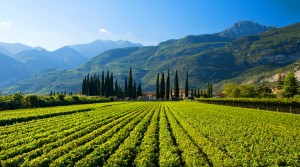
Campania is a beautiful region hugging the Mediterranean Coast south of Rome. This is the home to Naples, Pompeii, and arguably the spiritual home of pizza. Campania is also home to a set of very expressive wines, including the rich reds of Taurasi, made primarily with Aglianico, and a trio of white wines crafted from ancient grapes such as Falanghina, Fiano, and Greco. These grapes are hardly household names, but just two decades ago, they were in danger of going extinct. Falanghina is a wonderfully exciting wine in the glass, offering a range of rich flavors from peach to tropical fruits and citrus with mineral and herbal notes as well. It has a distinct flavor and offers a welcome break from an endless stream of Chardonnay, Sauvignon Blanc, or Pinot Grigio.
Sicily, like many Italian regions, is undergoing a significant period of change, as ancient varietals are now in vogue, and the wines at large are better than ever. Fortunately, Sicily offers many value options, from the vibrant whites made with the native Inzolia (also known as Ansonica) to the rich, jammy reds based on Nero d’Avola (also known as Calabrese). Sicily’s only DOCG, Cerasuolo di Vittoria, is made primarily with Nero d’Avola, as with several additional DOC wines. Prices range from $8 to $40 per bottle, with many delicious examples priced well under $20.
Beyond Nero d’Avola, some very compelling wines are being made near Sicily’s Mount Etna. Red wines made from grapes that few have heard of, such as Nerello Mascalese and Carricante, are remarkably complex and delicious. Look for this large DOC to be subdivided into several smaller DOCs, and perhaps a DOCG or two, in the coming years.
Bonus Italian Wine Region Data
Emilia Romagna – located in northern Italy, its capital city, Bologna, is a destination for food and wine lovers. This region is a food lover’s paradise, and the wines play a supporting role here. Lambrusco is the star, while the beautiful Romagna Albana is among the world’s most excellent dessert wines.
Friuli–Venezia Giulia – located in northeast Italy, is known primarily for its crisp and low alcohol white wines as well as Prosecco. The wines are often labeled with the varietal name, which takes center stage on the front label.
Lazio – is dominated by Italy’s capital city of Rome. For many decades, Lazio wines were cheap and cheerful, but not much more. Thanks to the steady rise of Cesanese, a local red varietal with great promise, and the rebirth of Frascati, Lazio is now a bona fide wine destination.
Lombardia – is in the middle of Italy’s northernmost regions. While fashion-lovers focus on the capital city of Milan, we are in love with the classic-method sparkling wines of Franciacorta. Also, don’t sleep on the great Nebbiolo wines made in Valtellina that can rival the wines in neighboring Piedmont.
Marche – is a great agricultural region located in central Italy along the Adriatic. The wines are rising in popularity with Rosso Conero (and Conero DOCG) and Rosso Piceno, both based on the grape Montepulciano, leading the reds and surprisingly complex whites made from Verdicchio. Offida is an appellation on the rise, producing DOCG varietal whites made from Pecorino and Passerina, and a Rosso made from Montepulciano.
Puglia – forms the heel of the famous boot, and it quietly offers 4 DOCG and 28 DOC zones. Reds dominate here, relying on Sangiovese, Primitivo, Negroamaro, and the soon-to-be-famous Bombino Nero.
Umbria – borders Tuscany in central Italy and is perhaps too figuratively shadowed by its famous neighbor. The very tasty whites from Orvieto (made from Grechetto and Trebbiano) are often a great value. However, the stars in Umbria are two red wine DOCG zones: Torgiano Rosso Riserva (based on Sangiovese) and Montefalco Sagrantino, made entirely with Sagrantino. Both of these great wines deserve more attention.
Well written!!
Thanks. Finally there is one simple article that gives a broad overview of Italian wine. I find Italian wine to far trickier than French wines that I know well.
Cool and thanks. I have to be more adventurous
Great read Sean! Grazie Mille!
Thanks a million Lisa!