
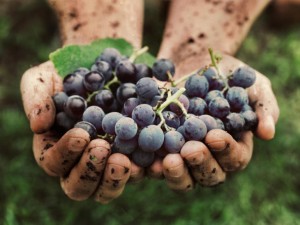
We have said this before on the pages of BevX, but it’s worth repeating — If we had to restrict ourselves to the wines of just one nation, it would be Italy. Why? For starters, Italy has more wine varietals than all other wine-producing nations combined. Variety is the spice of life. We choose variety in flavors and styles, and can do so while expecting top-shelf quality.
French wine varietals have become the international default grapes known to both novice and expert wine lovers. Chardonnay, Sauvignon Blanc, Cabernet, Merlot, and Pinot Noir are ubiquitous in the wine world.
Of course, there is nothing wrong with French varietals — we love them all. (Speak French Wine Grapes) Italy also loves French grapes, as well as their own unique varietals. Pinot Grigio, a very popular Italian wine export, is synonymous with France’s native Pinot Gris.
While France’s famous wine grapes have been adopted worldwide, Italy’s varieties have largely remained at home, save for Sangiovese, Barbera, and a handful of others. In most cases, Italian varieties should be left to thrive at home.
We encourage you to sample Italian varietals from their native nation and regions. We have assembled a short list of just 30 Italian varieties. Consider this the best homework assignment ever. We are curious to learn how many from the list below you have tried. Let us know below.
The 30 Italian varietals are organized alphabetically, and (R) indicates red grape, (W) indicates white grape.
Italian Wine Grapes
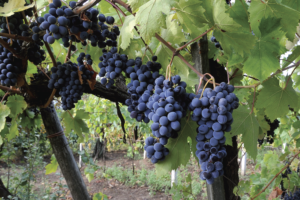
Aglianico (R) — is one of the world’s most excellent red wine grapes. It is believed to be one of Italy’s oldest grape varieties with ancient origins. It seems to have arrived in the region of Campania in the eighth century BC. To this day, Aglianico is grown primarily in central and southern Italy, most notably in Campania and Basilicata. The resulting wines are typically medium to full-bodied and robust, while lighter and fruitier examples are becoming increasingly common. The most renowned Aglianico wines are Taurasi and Aglianico del Taburno from Campania, as well as Aglianico del Vulture from Basilicata. These three wines have unique characteristics but share a deep, dark color, aromatics, and flavors redolent of black cherry, plum, wild game, and complex spice notes. This great grape variety is now finding a home in California and Australia.
Arneis (W) — is a tremendous white variety native to the Italian region of Piedmont. It was once known as Nebbiolo Bianco, tying it to Piedmont’s most famous varietal. It was once commonly added to Barolo, as well as other local reds, including Barbera. Like many Italian varieties, Arneis plantings had diminished to just a few rows of vines held on to by forward-thinking growers reluctant to abandon a grape with great history and potential entirely. In the 1970s, Arneis’ fortunes returned, and plantings increased to the point where it became the region’s most popular white wine in the 1980s. Arneis wines are typically dry and medium to full-bodied, offering wonderful aromatics akin to spring flowers, apricots, and Asian pears. This stylish grape is now being used in limited quantities in California and New Zealand.
Barbera (R) — is a tremendous red variety native to Italy’s Piedmont region, where it produces numerous wines as a solo variety and in blends. Barbera is one of Italy’s five most planted native varieties. It is grown primarily in Piedmont and neighboring Lombardia, but the best examples are surely made in Piedmont. It was once a very popular variety in California, where it often produced wines of distinction. Sadly, Barbera planting in California has greatly diminished, although it is well-suited to many popular appellations. The wines typically have deep color, intense fruit flavors, low tannin levels, and generous acidity.
Bellone (W) — is a great native white varietal that is scandalously under-appreciated. It can be found primarily in Lazio and has likely been present in the region since the days of the Roman Empire. Bellone is capable of producing dry, sweet, and sparkling wines. Hopefully, its versatility will encourage growers to increase plantings of this great grape.
Brachetto (R) — is an ancient, native red variety most commonly used to produce sparkling, semisweet red wines in Piedmont. Arturo Bersano popularized this style of sparkling Brachetto in the late nineteenth century. Due to the phylloxera blight, most vines disappeared, and along with it, the style was revived in the 1980s. The best wines are made in Piedmont and fall under the Brachetto d’Acqui DOC. The variety is scarcely seen outside of Italy.
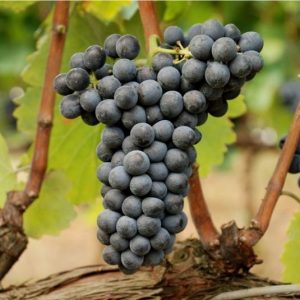
Cesanese (R) —This intriguing and complex varietal is grown nearly exclusively in Lazio. For most of its life, Cesanese was used to create sweet wines with a mild, fizzy texture. In many ways, the old, traditional Cesanese wines were much like Lambrusco wines. Fortunately, the recent push to rediscover Italy’s long-forgotten or neglected grapes has led to a renewed interest in Cesanese. In truth, the grape itself must carry some of the blame. Cesanese is fickle in the vineyard, and even in the warm Lazio summer, the grape is very slow to fully mature, often hanging until October to reach its full potential. Careful clonal experimentation and selection have identified the varieties best suited for producing serious, dry red wines. Cesanese di Affile (confusingly also a name of a DOC district) is the consensus champion clone. The top growing zone for Cesanese has also been identified as Cesanese del Piglio, which was elevated to DOCG status in 2008. (Learn more about Cesanese here.)
Cortese (W) — is a popular and ancient white variety grown in Italy’s Piedmont region where it produces the famous northern wine, Gavi. Outside of Piedmont, the variety is essential in Oltrepò Pavese, Veneto, and Lombardy. Cortese is rarely seen outside of Italy (although we have seen a few California versions at BevX). The wines are often light and dry with crisp acidity and are frequently paired with seafood.
Corvina (R) — is a popular and enormously significant red variety grown in Italy’s Veneto region and throughout the northeast. Corvina is the primary grape responsible for Valpolicella (including Amarone) and Bardolino. The quality movement in these areas has led to a new appreciation for Corvina, recognizing it as one of Italy’s noble red grape varieties. Corvina wines are typically medium-bodied, featuring a fresh and sometimes tart cherry flavor, with low tannins and a well-balanced acidity.
Dolcetto (R) — is a popular red variety grown in Italy’s Piedmont region, where it produces varietally labeled wines grown primarily in and around the towns of Alba and Asti. The resulting wines are softer, fruitier, and less tannic than the region’s best-known varieties, Nebbiolo and Barbera. This variety is gaining popularity in California, where it tends to produce darker and richer wines compared to its Italian counterparts.
Erbaluce (W) — is a tremendous white varietal grown nearly exclusively in Piedmont. Erbaluce is a grape unfamiliar to many wine lovers and professionals. Just 800 acres of the rare grape can be found in Italy and, therefore, the world. The top expression of Erbaluce is found in the tiny DOCG zone of Erbaluce di Caluso. The wines have fresh flavors redolent of ripe apples, peaches, and pears with a bright mineral accent and a generous dose of acidity. For years, some viticulturists have attempted to prove that Erbaluce is related to Arneis, but all such claims have been disproven. All evidence suggests that Erbaluce is a unique varietal that has been documented in its native Piedmont since 1606.
Falanghina (W) — is an ancient white variety grown primarily in Italy’s Campania region. The wines are unique, being both fruity and exotic, yet crisp and bright with high acidity. The flavors are unique and expressive, yet very approachable, making Falanghina a perfect wine for a rut-busting occasion and a clever alternative to Pinot Grigio. (See our Campania Whites Feature)
Fiano (W) — An ancient white varietal, known as Apianum to the Romans and Vitis Apiana, due to the fact that the sweet grapes are irresistible to bees. Fiano is used most prominently in Campania’s Fiano di Avellino. The wines show exotic fruit notes with a generous dose of natural acidity. It is a classy aperitif.
Gaglioppo (R) — is an ancient variety that is both flavorful and delicate, reminiscent of freshly crushed wild berries. Gaglioppo is popular in Italy’s Calabria region, where it is used to produce the renowned DOC Ciro and Donnici, as well as contributing to many other wines in the area. The wines are full-bodied while relatively light in color. Gaglioppo wines are often at their best with moderate bottle aging that allows the tannins to mellow and the flavors to harmonize.
Garganega (W) — A white variety native to northwest Italy, where it is primarily responsible for the famous Soave, among other wines of the Veneto region. This appears to be an ancient grape, and there is much evidence that it was used in wines made in what is now the Veneto before the Roman Empire. At their best, the wines are rich in orchard fruits, with a good dose of acidity and complex notes of dried fruit.
Grechetto (W) — is a great and vastly under-appreciated white variety grown almost exclusively in Umbria and Emilia-Romagna, with increasing plantings in Lazio. Like Greco, the name suggests an early Greek origin, but these two varietals are unrelated. Confusingly, there are two distinct Grechetto varieties: Grechetto di Orvieto (Grechetto G109) and Grechetto di Todi (Grechetto G5). The Orvieto variety is thought to be related to Trebbiano, while the Todi variety appears to be unique and the preferred of the two. Of course, this sort of thing gives headaches to those wishing to master Italian wines. We recommend seeking out Grechetto grown in the Todi DOC. These wines are wonderfully floral and complex, with rich orchard fruits and vibrant acidity.
Greco (W) — is a tremendous and versatile grape grown in the south of Italy. Despite its name, this varietal is unrelated to any known varietals from Greece. Greco’s most significant expression can be found in the wines of Greco di Tufo DOCG. Greco expresses its deep and somewhat wild flavors here in the rich volcanic soils. These wines are both generously acidic, yet oily and rich on the palate, with a hint of tannin on the finish. Flavors and aromas of wildflowers, stone fruits (both dried and fresh), pear, green apple, earth, nuts, and honey. Greco di Tufo will almost always benefit from a few years of bottle age.
Grignolino (R) — is a red variety that was once fashionable in Italy’s Piedmont region. It is native to the Monferrato Hills near the town of Asti. Wines made from Grignolino were once as highly prized as Barolo, but it sadly does not hold the same value today. The number of Grignolino vines is shrinking as growers are quick to replant with more fashionable grapes. Its wine’s light, almost pink color, and soft, delicate flavors seem out of place with most modern palates, but this is a shame. A well-produced Grignolino features complex berry and cherry flavors along with bright acidity. These wines seem natural for those who love bold rosé wines and anyone wishing to preserve this great old grape.
Lagrein (R) — is a red variety long appreciated in Italy’s Trentino-Alto Adige district. The wines can be pretty high in acid and sometimes astringent. The wines are deeply colored with dense berries and earth notes. The variety is a rarity outside of Italy, but we have seen a lovely example from California that gives us hope that this quirky variety may grow in popularity.
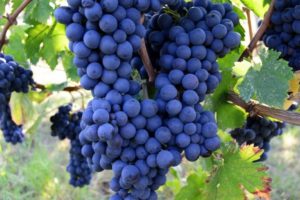
Montepulciano (R) — is an ancient and increasingly popular variety grown in central and south Italy. If Montepulciano is known at all, it is most frequently associated with its starring role in the Montepulciano d’Abruzzo wine. This is easily understood as nearly half of the Montepulciano grown in Italy is utilized in the DOC of Montepulciano d’Abruzzo. Top among these at this stage is Colline Teramane Montepulciano d’Abruzzo DOCG (the only DOCG wine from Abruzzo). Marche is Abruzzo’s neighbor to the north. While Abruzzo is the undisputed king of Montepulciano, the region of Marche can boast two DOCG wines: Offida Rosso and Conero. In addition to these appellations, Marche also offers the DOCs Rosso Conero and Rosso Piceno, which are Montepulciano blends with a primary role for Sangiovese. (See our Montepulciano feature)
Nebbiolo (R) — is one of Italy’s, and the world’s, most noble red varieties. Nebbiolo is prominent in the Piedmont region, where it is responsible for the renowned DOCG (Italy’s top official classification) wines of Barolo and Barbaresco, as well as the lesser-known Gattinara DOCG and Ghemme DOCG. Nebbiolo is also a vital varietal in neighboring Lombardia, most notably in Valtellina. For the grower, Nebbiolo has a reputation for being difficult. The wines are often light in color, but don’t be fooled. Nebbiolo wines are often robust, characterized by high tannin levels. Flavors and aroma characteristics include violets, herbs, cherry, raspberry, tar, truffles, and dried berries.
Negroamaro (R) — is an increasingly popular variety from Italy’s Puglia region. It is rarely found outside of Puglia. The name, meaning ‘black and bitter,’ most surely describes the wines as black as shoe polish, with loads of spice that supports the rich, ripe blackberry, prune, and black cherry flavors, often cloaked in firm, chewy tannins. In addition to producing big and sturdy reds, Negroamaro also yields beautiful rosé wines that are rich in fruit. Our favorite Negroamaro wines are made in the Salice Salentino DOC.
Nero d’Avola (R) — is Sicily’s most noted red variety and is seen sparingly elsewhere in Italy. This grape is used as both a solo performer and in several popular Sicilian blends. The wines are fruit-driven, delivering flavors of black cherry, plum, cigar tobacco, licorice, and dried herbs. The Nero d’Avola variety has gained popularity, thanks in part to a significant number of exports sold at value prices (most at under $20). (Synonymous with Calabrese.)
Nero Buono (R) — is another Italian grape known chiefly by the most fevered Italian wine lovers. The grape hails from the hills near the town of Cori, which is about an hour’s drive southeast of Rome (Lazio). Nero Buono has been known in the regions for thousands of years, but it was never favored as a serious red wine grape. At best, the varietal was prized for its ability to bring intense color to red wines. Today, Nero Buono is being treated with respect and care, and the wines crafted with this varietal seem to improve each year as winemakers learn to unlock their secrets. Today, the best wines seem to come from the Cori DOC, where Nero Buono can be made as a varietally labeled wine, and the Cori Rosso wines must contain at least 50% Nero Buono. This varietal is on the rise, and I predict that it won’t be long before a DOCG wine based on Nero Buono emerges in Lazio.
Pecorino (W) — is a terrific Italian variety that was nearly lost. In the years when cooperative-driven winemaking was king, Pecorino was often replaced with varietals like Trebbiano, which produced large quantities of fruit with minimal effort. By the 1970s, it was widely believed to be extinct, but in the 1980s, a small wine producer in the Marche region discovered a few vines while searching for native grapes. In the 90s, a handful of producers in Marche and Abruzzo had enough mature vines to produce small quantities of Pecorino-based wines. The results were favorable as Pecorino wines flow over you with their distinctive floral tones and bright natural acidity. This is rapidly becoming one of the region’s favorite white grapes.
Primitivo (R) — is a successful and robust red variety from Italy’s Puglia region. In the USA, Primitivo gained recognition when it was first discovered that it was a close relative to California’s beloved Zinfandel. Primitivo is gaining in popularity as many new labels, often available at competitive prices, have found their way to US stores and restaurants. The wines are rich and rustic with blackberry and raspberry flavors.
Ruché (R) — is the forgotten grape from Piedmont. In a region dominated by the rightfully famous Nebbiolo, Barbera, and Dolcetto, the scarcely planted Ruché (fewer than 300 acres) is rarely mentioned outside of its native region. Despite Ruché’s relatively small footprint in terms of acres planted, it has garnered serious attention from Piedmont wine lovers, and the zone of Ruchè di Castagnole Monferrato was awarded DOCG status in 2011.
Sagrantino (R) — is a native of Italy’s Umbria region, a landlocked region in central Italy that borders Tuscany, Lazio, and Le Marche. More than 90% of all Sagrantino grown in Italy is grown in Umbria. Sagrantino features in one appellation, Montefalco Sagrantino DOCG, and it plays a supporting role to Sangiovese in Montefalco Rosso. Sagrantino, like many Italian varietals, was in danger of extinction. Arnaldo Caprai is often credited with the revival of this grape. Caprai bought his estate in 1971 and planted 13.5 acres of Sagrantino in 1973. His wines are regarded by many as the gold standard of Sagrantino in Umbria. (See our Sagrantino feature)
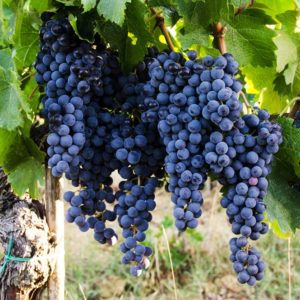
Sangiovese (R) — Italy’s most widely planted varietal is one of the world’s finest wine grapes. It is impossible to overstate Sangiovese’s importance to the wine world in Italy and the world. Sangiovese is most famously used in Tuscany, where it is the primary variety of Chianti, Vino Nobile di Montepulciano, and the sole varietal in the world-famous Brunello di Montalcino. Sangiovese is used throughout Italy, and despite its widespread fame, it is relatively scarce outside of Italy. While Sangiovese can express many different flavors, depending on where it is grown and, to a lesser degree, how it’s treated, it reliably offers flavors of cherry (both tart and sweet), earth, oregano, roasted tomato, black tea, licorice, and violets. We have found lovely versions of Sangiovese made in the USA. All of the better USA examples are grown in regions with cool nights and longer growing seasons.
Verdicchio (W) — An ancient white variety of distinction most prominently used in Italy’s Marches. The array is best showcased in the areas of Castelli di Jesi and Matelica, where they produce wines that are noted for their complex, ripe green apple notes and distinctive nutty accents. Recently, we have seen Verdicchio in California! Stay tuned.
Vermentino (W) — A white variety producing unique wines from Tuscany to Sardinia and Liguria. The variety is also crucial in the South of France. This versatile grape produces dry, crisp white table wines, as well as sparkling and sweet wines.
Vernaccia (W) — A white variety of some distinction, most notably known for its wines produced in and near the Tuscan town of San Gimignano, Vernaccia di San Gimignano. Vernaccia produces wines with a pleasing fruity character matched with generous acidity and a fresh, clean finish. It is rarely seen outside of Italy, but there are a small handful of US examples.