
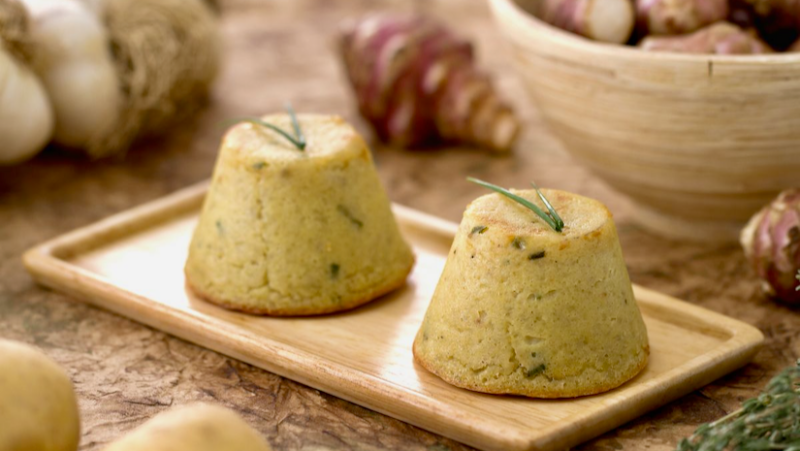
For those of us who love to cook, we find inspiration in books, from television, but mostly from eating — especially on the road. Traveling is fulfilling in so many ways, but for me, one of the greatest joys and benefits is eating in restaurants. From simplistic to fancy, I love them all — with a tilt toward simplistic. On one adventure, I discovered the artichoke flan.
One of my favorite restaurant cities in the world is Rome. As the capital, Rome brings together culinary treasures and trends from all 20 Italian regions. Despite hundreds of restaurants in the city, each year we find a dish on menus throughout the city center that wasn’t there before. You’ll see it once and then again, and again until curiosity breaks you down and you order it. This is the story of sformato di carciofi — artichoke flan.
After spotting it on the second menu in as many days, I knew what I had to do. It was delicious. I ordered again from two other restaurants that week, and the results were consistent — it was a hit. All versions had their own subtle twists, but the savory flan at its core was very similar.
I made a few notes, both mentally and on paper, knowing I would want to recreate this dish at home. Once home, I pored through numerous Italian cookbooks without a trace of artichoke flan. So, it was on to the kitchen to experiment with creating a savory flan that’s ideal as a starter. Luckily, I had about 80% success on my first go, then fine-tuned it in subsequent attempts. It’s now a trusted dish in my menu planning.
Our Recipe for the Perfect Artichoke Flan
- 15 ounces of artichoke hearts
- 2 tablespoons of extra virgin olive oil
- 1/4 cup heavy cream
- 1/4 cup ricotta
- 3 eggs
- 1/2 cup grated Pecorino Romano
- 1/2 once dried porcini (optional — about four pieces)
- 1/2 once lemon juice
- teaspoon finely chopped thyme
- salt and pepper
(Feel free to use fresh, raw artichokes. Seeing that they are very seasonal in the US and the quality is spotty, I most often use a quality jarred/canned version from Italy.)
If using the dried porcini, rehydrate in 3/4 cup hot water for 30 minutes. Remove the mushrooms and give them a rough chop. Save the steeping liquid.
If using canned or jarred artichoke hearts, drain them, rinse them well, and then pat them dry. Place the hearts in a small pot in a single layer and pour over a couple of tablespoons of olive oil and the chopped thyme. Cook over low heat for 20 to 30 minutes, partially covered, until soft. Remove from heat and set aside to cool.
Add all ingredients to a food processor or high-powered blender and blitz until very smooth. Pass the mixture through a fine mesh strainer to catch the small artichoke fibers. This step takes a few minutes, but it’s worth it, as it yields an ultra-smooth flan.
Pour the mixture into individual ramekins or into a well-buttered muffin tin. Bake on a baking sheet in the center of a 350F oven for twenty minutes. Allow the flans to set for a few minutes before serving.
If you like, you can make a simple Parmesan cream sauce to serve alongside your flans. One cup of half-and-half, one tablespoon of cornstarch, one-quarter cup of grated Parmesan or Pecorino Romano, salt and pepper, with a pinch of nutmeg, heated in a heavy pot until thickened. Optionally, add a couple of tablespoons of the porcini liquid.
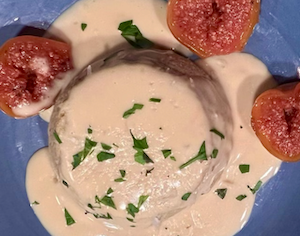
Serve with a charming ancient white wine from Campania or your favorite bubbly.
About Artichokes in Rome
Of course, Rome is famous for its two classic artichoke dishes (the artichoke flan is a rare sight): carciofi alla giudia and carciofi alla romana. Alla giudia artichokes are a Jewish-Roman delicacy, created in Rome’s Jewish Ghetto, but now available throughout Rome. Artichokes alla romana are trimmed, stuffed with a garlic and herb mixture, and braised in olive oil and water (often with white wine). It is served hot or cold, often with a touch of lemon juice.
Both of these classic Roman artichoke dishes should ideally be served and enjoyed while Roman artichokes are in season—February through April (sometimes a bit earlier, and sometimes the season can run into May). However, these two dishes are so popular with tourists that many restaurants serve them year-round using artichokes grown in other parts of the world. We are not a fan of this development. Eat what is in season!
Learn more about carciofi alla giudia and carciofi alla romana from these external links.