
The Casauria subzone of Montepulciano d’Abruzzo DOC has been officially recognized as Casauria DOCG. The designation was made in November 2025, and it may be used by producers in the zone this coming harvest (2026), which means that the first wines will be available to consumers in 2028.
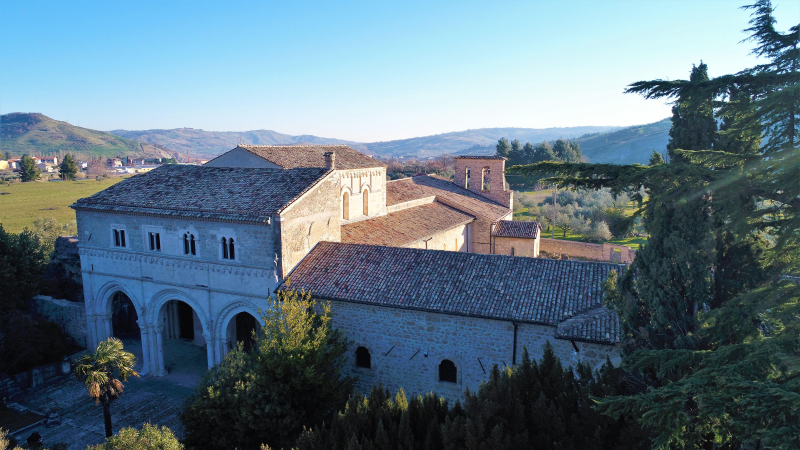
Casauria is named after the Abbey of San Clemente a Casauria, a Romanesque complex established in the ninth century in the Pescara River valley. The Abbey was founded by Louis II, the great-grandson of Charlemagne, and was later dedicated to St. Clement. The site is open to visitors much of the week. This is an area of Italy that is not frequented by visitors to the country. Yes, it is a bit remote, many miles from airports typically utilized by tourists.
Casauria becomes Italy’s 79th DOCG, joining Colline Teramane DOCG and Tullum/Terre Tollesi DOCG as upgraded and delimited expressions of Montepulciano d’Abruzzo. Abruzzo, the region with more than half of Italy’s Montepulciano vineyards, can now boast the most DOCGs dedicated to the varietal. Previously, Abruzzo was tied with neighboring Marche and their two DOCG fantastic Montepulciano reds: Offida and Conero.
The popular Montepulciano d’Abruzzo appellation is capable of producing wines that are worthy of mention among Italy’s elite reds. However, the quality of wines produced here is uneven, with some producers opting to capitalize on Montepulciano’s vigor, resulting in large yields and wines that are simple and juicy rather than deep and contemplative. I am thrilled that Montepulciano d’Abruzzo is evolving and striving for excellence while offering some of the best quality-to-price ratios in the world of wine.
The Casauria DOCG appellation is dedicated to red wines made exclusively with Montepulciano. The zone is situated in the foothills of the Apennines, inland from the coastal town of Pescara, with vineyards at elevations of 200 to 600 meters. The minimum ABV (alcohol by volume) is 13% and 13.5% for Riserva wines. The standard wines must be aged for 18 months, and the Riserva for 24 months. Oak aging is not required, but it is believed that a portion of the mandatory 18 months will be done in oak. The maximum grape yield is 9,000 kg per hectare, resulting in about 63 hl of wine per hectare. The sunlight in this zone, coupled with controlled yields, virtually ensures that alcohol levels are met each year. This relatively small appellation will produce roughly 20,000 to 25,000 cases of wine annually. It’s a safe bet that much of this wine will not make it outside of Italy.
What to expect from Casauria DOCG Montepulciano Wines
 The aromatic and palate profiles should be similar to those of Colline Teramane, but as the zone is established, I imagine a distinct yet subtle difference will be perceived. Considering the altitude and the abundance of sunshine and cool nights in Casauria, the conditions conspire to create wines with power and finesse.
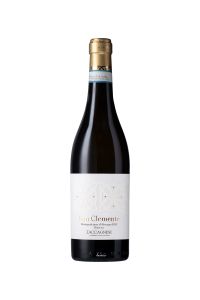
One possible benchmark is an intriguing wine from Zaccagnini Winery, a large-to-mid-size winery in the appellation with a significant presence on the global market, including the USA. The winery’s flagship white-label Montepulciano d’Abruzzo can be found on shelves nearly everywhere, while their limited “cru” wines are rarely seen outside of Italy. One cru wine of note is their “San Clemente” Montepulciano d’Abruzzo, a single-vineyard wine named for the historic abbey in the Casauria Valley. This wine offers notes of blueberry jam with accents of licorice, cumin, and white pepper. It meets the new DOCG requirements in alcohol strength, and it’s aged 18 months with 9 months in barrique (oak). In Italy, the wine sells for around 25 euros, making it an exceptional value for a wine of this pedigree.
I eagerly await pouring my first bottle of Casauria DOCG in 2028.