
In a world that is becoming increasingly smaller with each year, you are hard-pressed to find yourself far away from an Irish Pub regardless of your location. Stuck in Manila? I can point you to a great Paddy bar. Ditto for Reykjavík, Rome, Bordeaux, Guadalajara, Munich, Brussels, Hong Kong, and just about anyplace that tolerates the fine art of drinking.
The Irish Pub is the world’s friendliest and most covert church where the flock congregates daily. An essential element of the doctrine is Irish Whiskey. But it’s not just the Irish pubs. All bars are inclined to offer Irish Whiskey, and the category offers something in all strata, from the quickly quaffed shots to a slowly sipped nectar in the form of a 12-year-old Irish Pot Still Whiskey.
Whiskey and Ireland are inseparable. This is the birthplace of Whiskey. Ireland has seen a glorious rise, becoming the world’s top Whiskey maker, followed quickly by a calamitous fall from grace, and, as luck would have it, a recent change of fortune.
The History of Irish Whiskey
Until recent times, all of Ireland’s great Whiskey brands were produced at one of the country’s three active distilleries (between 1966 and 1987, there were just two). But let us not get ahead of ourselves. Ireland’s Whiskey history looks back more than 1,000 years, and it’s a story worth telling.
There is evidence that nomadic monks made their way to Ireland in the 6th century, bringing rudimentary distilling skills with them. Much of this was reserved for the making of perfumes and medical tinctures.
In the 11th and 12th centuries, Irish monks returning from their travels through the Mediterranean region brought back the skills to distill potable spirits. While the Mediterranean had abundant vines, Ireland did not, but it did have grain and crude beer – both of which could be distilled. Eau de vie (water of life) spirits made commonly from fruit had become uisce beatha (later to be anglicized to whiskey) in Irish Gaelic. Whiskey was born.
The Red Book of Ossary mentions Irish Whiskey in the 16th century, but Whiskey was largely reserved for religious orders. At this time, straddling the Tudor period, Whiskey became a drink available to anyone across all classes, not just the elites. Russian Czar Peter the Great said, “Of all the wines, the Irish spirit is the best.”
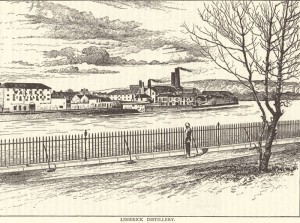
At the dawning of the 19th century Whiskey grew from being largely a farm product to becoming a full-fledged industry. By 1823, Ireland was home to 40 official Whiskey distilleries, and that number swelled to 86 by 1840.
During that same period, an invention that would change the world of distilling forever was created. Aeneas Coffey, an Irish excise man (yes, this is dripping in irony), patented his column, still based on his enhancements made to Scotsman Robert Stein’s original design. The Irish distillers weren’t too fond of Coffey’s still,l but the Scots loved it.
By 1900, there were more than 100 Whiskey distilleries in Ireland, and Dublin was the epicenter. Ireland was the Whiskey king of the world, selling the equivalent of 12 million nine-liter cases of Whiskey per year. The world was in love with Irish Whiskey, but no nation more so than the USA. This was truly the golden age of Irish spirit.
However, trouble was looming just along the horizon. Remember that the Scots were still in love with the column. These stills could more efficiently and cheaply produce Whiskey. By 1910, there was a surplus of whiskey, and when supply outpaces demand, prices fall.
In 1916, Ireland witnessed the Easter Rising while the Brits were fully engaged in World War I. The First World War took its toll on brewing and distilling, as barley was greatly diverted to the war effort. Conflict at home and abroad took its toll.
While the First World War concluded in 1918, Irish Whiskey distillers’ greatest customer, the Americans, decided to take an extended break from alcohol with the passing of the 18th Amendment, effectively killing their number one export market. Prohibition in the United States lasted until 1933, and during that time, Ireland experienced a war of Independence in 1921 and a protracted civil war between 1922 and 1923.
When Prohibition in the USA was repealed, Ireland was still subject to the crown’s trade embargo on all goods made in Ireland. This, of course, eliminated the numerous outposts of the empire, including Canada, South Africa, Australia, and New Zealand, as well as the UK itself. Essentially, 25 percent of the world’s ports were off limits.
In a matter of just three decades, the once thriving Irish Whiskey industry, the envy of the world, was nearly mortally wounded.
The Irish distilling industry was all but dead. By 1953, there were only six distilleries left, and by 1966, there were four, which soon became two as Jameson, Powers, and Cork Distillers merged to form Irish Distillers (Bushmills being the other of the two).
Irish Whiskey limped onward with its two distillers, which, for a time, were both owned by the same multi-national entity, until 1987, when Cooley Distillery in County Louth was launched, ending a 100-year-plus drought of new Whiskey distillers in the Emerald Isle.
The Modern History
The introduction of John Teeling’s Cooley in the late 1980s changed everything, and its gradual success breathed much-needed life into the wounded, once-proud industry. Until the 1990s, all Irish Whiskey labels sold worldwide were produced in just two distilleries. Now there were three.
The new millennium brought good fortune to the Irish Whiskey business. While Ireland was selling 12 million cases of Whiskey in 1900 they dipped to just 400,000 cases in the mid-1970s. However, in the decade between 2002 and 2012, Irish Whiskey exports rose by an impressive 220 percent. In 2012, Ireland’s lone independent distillery, Cooley, was sold to drinks giant Beam.
In a relatively short time, and a great deal of sweat and tears, John Teeling had turned a County Lough potato spirits distillery into Cooley, one of the world’s most respected Whiskey distilleries. With the sale to Beam complete, Teeling would not simply go quietly into the night.
UPDATE 2026 – As of today, there are at least 50 working distilleries in Ireland producing Whiskey. There are a number of distilleries in the planning and development stage. Below is a quick look at the players.
The creation and subsequent sale of Cooley inspired dozens of aspiring Whiskey makers. In 2012, the new Irish boom was underway. Dingle Distillery, County Kerry, started Whiskey production in November 2012. Their production remains small, and not much of their Whiskey (Single Malt Irish Whiskey, Single Pot Still, and a 10-year-old Single Malt) is seen outside Ireland, while their Gin and Vodka have an international audience.
Echlinville Distillery, County Down, opened in 2012. They are crafting traditional triple-distilled Whiskey, as well as Irish Pot Still and Single Malt Whiskey, sold under a variety of monikers. They also offer a variety of Gins and Vodka.
West Cork Distillers, County Cork, quietly opened in 2003 and created a few uninspiring labels, but the Whiskies, a Single Malt and blended Irish Whiskey, sold with the West Cork label are lovely. West Cork has been building stocks and is now a real player in the Irish Whiskey market and are now making Whiskies worthy of your attention.
Tullamore D.E.W., County Offaly, owners William Grant built a new distillery that was opened in 2013. The original Tullamore D.E.W. distillery had been closed since 1954 (built in 1829), while the label remained with the Whiskey being made at both Bushmills and Cork Midleton. A dedicated grain distillery was added in 2017, allowing the brand to produce from grain to glass.
Glendalough Distillery, County Wicklow, was founded in 2011 and built its distillery in 2013. They offer a range of Whiskies sourced from established Irish distillers, as well as a nice Gin and Poitin. In 2018 Glendalough released a bit of Whiskey from their own stills and they have been growing ever since.
Walsh Whiskey Distillery, County Carlow, received its pot stills in 2015 and is slowly building stocks before being acquired by Amber Beverage Group (ABG) in 2021. They got started by creating two popular Whiskies, the Irishman and Writer’s Tears brands. Production and discussions of expansion seem to be in limbo.
The Teeling family didn’t wander far after the sale of Cooley to Beam, and in 2012, John Teeling’s sons launched a brand that carries the family name. Teeling Whiskey was launched with casks set aside from their days at Cooley. Teeling opened its Dublin distillery in June 2015, making it the first new distillery in Ireland’s capital city in over a century. Today, Bacardi Limited owns the majority stake in the brand, while production is steady and strong.
At the same time, John Teeling was busy creating the Great Northern Distillery, County Louth, on the site of the old Great Northern Brewery (aka Harp Brewery) in Dundalk. Pot stills fired in September 2015, while the column stills started a couple of months earlier. This is Ireland’s largest independently-owned distillery. The total production for both malt and grain whiskey will be about 50 million bottles a year. Great Northern Distillery is a growing force to be reckoned with in the Irish Whiskey world. They are primarily a bulk producer, helping new brand owners bring their Irish Whiskey dreams to life.
Founded on the winter solstice in 2014, The Shed Distillery in County Leitrim became Connacht’s first working distillery in 101 years. Small batch Irish Pot Still and Single Malts are in the works, along with their Gunpowder Irish Gin and potato Vodka. They do make some of Ireland’s best and most interesting Gins. Their Drumshanbo Single Pot Still Irish Whiskey is now available.
The Waterford Distillery was launched in 2015, using Irish barley from 46 Irish farms. The first Whiskey was run from stills in 2016 and rests in both French and American oak. Their finished Whiskies are presented in various tiers, including single farm origin Spirits.
The Connacht Whiskey Company in County Mayo opened its doors in 2015. They offer Single Malt Whiskey, Gin, Vodka, and Poitin. After acquisition by Terroirs Distillers in 2024, they changed their name to Ballina Whiskey Distillery. They offer two core Whiskey expressions:
Dúbailte (double wood) and Triarach (triple wood).
Alltech Distillery (Pearse Lyons) in Carlow has Kentucky roots as evidenced with their two Vendome stills. They are currently waiting for their Whiskies to mature.
Rademon Estate Distillery in County Down filled its first casks of Whiskey in 2015. Their first Single Malt was matured in 2019. They also offer their own Shortcross Gin.
Slane Distillery in Meath was founded in 2015. Owned by Brown-Forman these Whiskies have enjoyed wide availability to the USA. Their Triple Casked Whiskey is found everywhere.
Ballykeeffe Distillery in Kilkenny is producing Whiskey, Gin, Vodka, and Poitin at their farm distillery. Their first Whiskey was distilled in 2017. They have released a limited number of bottles of their Single Estate Whiskey to be followed by a Single Malt and Single Rye.
Blackwater Distillery in Waterford started production in 2018, offering a wide range of Gins and Vodka for sale today, while their Whiskey sleeps. They have released their first Single Malt and Irish Pot Still Whiskies in 2023.
Clonakilty Distillery in Cork, Ireland, opened in March 2019. They focus on Irish Single Pot Still Whiskey and Irish Gin. They feature three copper pot stills, and they are known for their Single Pot Still Whiskies finished in Bordeaux and Port wood.
Dublin Liberties Distillery launched in 2018 with a cozy bar and shop – a must for visitors to Dublin. They offer an extensive collection of sourced Whiskies.
Lough Mask Distillery in Mayo started production in 2018. Their first Whiskey, Loch Measc Single Malt, is due out any week now (as of March, 2022). In the meantime, you can try their Gin and Vodka.
Boann Distillery in County Meath has ambitiously set about creating Whiskies from lost historic mash bills. The project started in 2020. Their ambitious range includes Single Pot Still expressions finished in Marsala, Madeira, and Pedro Ximénez casks, as well as limited, seasonal releases.
Copeland Distillery in County Down offers an Irish Gin while their Single Malt and Irish Pot Still Whiskies mature.
Distillers offering their first Whiskies in 2025 include: Hawks Rock Distillery (County Sligo), Hinch Distillery (County Down), and Adara Distillery (County Donegal).
While these newcomers have just started creating a new spirit, their Whiskies won’t be ready until rested in cask for at least three years, and in most cases, a few additional years to reach ideal maturity. Don’t panic, the Whiskey is on the way.
What’s with the “E”?
In short, Scottish Whisky has no ‘e’ while Irish Whiskey does. There are many theories to explain this subtle difference, including the cheeky suggestion that the Scots were too frugal to buy the additional vowel! The most credible explanation is that in the mid- to late 1800s, Scotch Whisky brands saturated the marketplace with cheaply made whisky. Producers in Ireland, in an effort to further distinguish their products, adopted the use of the extra vowel. Certainly, this is not a condition that exists today, but the subtle spelling variation endures. In the world of Whisky, we generally find that Canada, Japan, and Wales follow the Scottish spelling, while the USA uses both spellings. In no way should consumers believe that the choice of one spelling over the other is any indication of style.
Defining Irish Whiskey
All Irish Whiskey by law must be aged in wood casks for a minimum of three years. Much of the malt Whiskey in Ireland is triple distilled, but not all, as Cooley notably uses a double pot still distillation. As is the case in Scotland, Irish distillers prefer used casks for maturing their Whiskey. Most of the casks in Ireland come from the USA, as Bourbon and Tennessee Whiskey makers are required to use new casks. In a beautiful symbiotic relationship, these once-used American white oak casks travel around the globe.
Types of Irish Whiskey
Blended – this is by far the greatest volume of Irish Whiskey. As the name suggests, it’s a blend of grain Whiskey and malt Whiskey.
Grain (single grain) – In Ireland, grain Whiskey is most often made with maize. It is produced in column stills and aged in casks (most often ex-Bourbon casks).
Malt (single malt) — is made with malted barley the same material responsible for the world’s great beers. It is distilled in pot stills and is much more weighty than grain Whiskey. When you see “Single” in conjunction with malt or grain, this indicates that the Whiskey was made entirely at one distillery.
Irish Pure Pot Still is much like malt Whiskey, as it utilizes malted barley in a pot still, with the distinctive difference of including unmalted barley. This style is very distinctive to Ireland and came about as a reaction to the crown’s malt tax of 1682. You will now often see these Whiskies labeled as “Single Irish Pot Still Whiskey,” further indicating that they were made entirely at one distillery.
Visiting Irish Distillers
The Irish Whiskey Way site was launched by the Irish Whiskey Association (IWA) in late 2025. This is the definitive site for all Whiskey lovers looking to explore the wonders of Irish Whiskey in the Emerald Isle.
Great article, and what a story to tell so much so that following my retirement I’m inspired to tell my the story of Tommy Roche my granduncles who before leaving Ireland took the Fr. Matthew Temperance Pledge before joining Chicago PD. He was the 1st to arrest Capone on arrival from NY and later saved Capone from execution by colleagues. He then became the bane of Capone and the Mobs during Prohibition. Then nearing his end Capone who admired & hated Roche in equal measure, saved Roche from execution! You couldn’t make it up. Working title ‘Prohibition Pledge’ hope to get published for launch in 2020 the centenary year.
Thanks for the comment.