
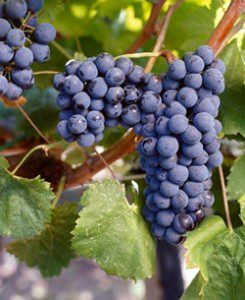
If many wine publications are to be believed, Sagrantino is “probably Italy’s most tannic red wine.” This is a heavy burden for any varietal to bear. We find Sagrantino to be one of Italy’s most nuanced, while undeniably intense, wine grapes with chewy but well-polished tannins and gorgeous red and black fruit flavors.
Sagrantino, like many native Italian grapes, has a complex and uncertain history. It’s essential to recognize that the vast expanse of history (roughly 1,000 years) between the fall of the Roman Empire and the Renaissance was a period of significant historical loss. From what we do know, Sagrantino appears to be a grape with an ancient history.
There are written accounts of the grape we now call Sagrantino from the Middle Ages, while the name Sagrantino seems to have first appeared in 1598. It is nearly certain that from the 16th century through much of the 20th century, Sagrantino was used to create sweet wines. These wines were made using the appassimento technique, which involves partially drying grapes to create a rich and complex wine. When the DOC that features Sagrantino was created in 1977, it was for sweet wine, not dry red.

Sagrantino is a native of Italy’s Umbria region – a landlocked region in Central Italy that borders Tuscany, Lazio, and Le Marche. More than 90% of all Sagrantino grown in Italy is grown in Umbria. There are many great wines made in Umbria, but this story focuses on the iconic Sagrantino variety.
Sagrantino features in one appellation, Montefalco Sagrantino DOCG. Sagrantino is the sole grape utilized to create this dense, complex, and age-worthy wine. This appellation was formerly part of the Montefalco DOC and was awarded its own designation in 1992. It was named Sagrantino di Montefalco, later becoming Montefalco Sagrantino in 2009. Sagrantino plays a supporting role in the wines of Montefalco Rosso DOC, blending with Sangiovese in quantities ranging from 10% to 25%.
Saving Sagrantino from Extinction
Like many Italian varietals, Sagrantino was on the verge of extinction. Arnaldo Caprai is often credited with reviving this grape. Caprai bought his estate in 1971 and planted 13.5 acres of Sagrantino in 1973. His wines are regarded by many as the gold standard of Sagrantino in Umbria. There are nearly 60 producers of Montefalco Sagrantino DOCG (some producing multiple expressions). There is a high standard in the appellation.
Sagrantino has quite high polyphenol levels that contribute to its wines’ dark color and dense tannins. Sagrantino wines are described as having abundant aromas and flavors, with notes of red berries, red and black cherries, ginger, anise, cocoa, vanilla, and brown baking spices. The famous tannins are surely plentiful but present themselves as well-polished and rarely astringent.
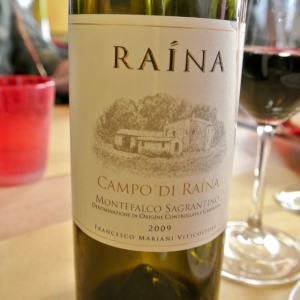
In the case of Montefalco Sagrantino DOCG, it is required to be aged a minimum of 37 months, including a minimum of 12 months in barrel. Many producers greatly exceed this 12-month minimum in wood. This is a deep and complex wine that will begin to show its full potential five years after its vintage. In favorable vintages, it can age for decades.
If you have never experienced Sagrantino, I suggest trying a bottle or two of Montefalco Rosso to subtly introduce your palate to the complex and rustic flavors Sagrantino offers. Montefalco Rosso is made primarily with Sangiovese, with up to 25% Sagrantino. Once you have acclimated your palate to the new flavors, you can make the step up to Montefalco Sagrantino.
Montefalco Sagrantino requires some breathing time, so we recommend decanting the wine at least 30 minutes before serving (two or three hours is not unusual). This bold food and wine pairing is well-suited for cured sausages, game, braised meats, and aged pecorino cheese.
One of the most nuanced, and relatively undiscovered, reds in Italy. Not much of it in the New World, but I brought it to Raffaldini Vineyards in North Carolina’s Swan Creek AVA and it has excelled.
I would love to try a New World version of Sagrantino. I’ll look for this when I’m in North Carolina.
Sean – it’s also thriving in California! Check out DaVero in Healdsburg (Sonoma County). They do an amazing job with Italian varieties, including a Sagrantino that turns heads! A great way to get acquainted is through the newly launched Virtual Tasting kit offered (affordable AND a stellar line-up of wine including Sagrantino). The juice is delish!!
Great news. We would certainly encourage DaVero to send us some Sagrantino so we can share it with our readers.
We at Denier-Handal Vineyards have been growing and making dense, dark and delicious Sagrantino wine grown in the Dry Creek Valley, Healdsburg, Sonoma County California successfully for quite some time.