
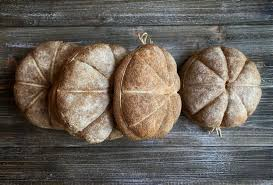
Bread is an ancient food that traces its origins to around 14,000 years ago, when man was largely still nomadic. Archaeobotanical evidence from northeastern Jordan shows early humans ground wild cereals into flour, mixed it with water, and baked unleavened flatbreads on hot stones or embers—long before farming took hold.
Once man created settlements, they farmed and domesticated wheat and barley, destined to be made into bread. It was during the Neolithic Revolution, around 10,000 BC, that bread became a staple of the human diet. Around 3000 BC, the ancient Egyptians pioneered leavened bread using wild yeast (possibly from beer fermentation), creating lighter, risen loaves that became central to their diets.
Nutritionally, bread provides carbohydrates for energy, as well as protein, fiber (in whole-grain varieties), iron, and B vitamins—supporting populations through labor-intensive eras all the way to the industrial revolution and beyond.
Culturally, bread symbolizes life, community, and hospitality. The idea of “breaking bread” crosses languages, cultures, and religions. How could we so quickly forget what this provision has meant to us?
Bread in the USA
Unfortunately, what is sold as bread in the USA today can’t even be considered food in much of Europe. Over a century ago, American farmers began removing the bran and germ, the fiber and nutrients, to make flour more shelf-stable, which left it nearly nutritionally dead. Since the nutrients are stripped out, the flour is then enriched with folic acid, which most of the population cannot properly metabolize. As a result, many people experience fatigue, anxiety, hyperactivity, and inflammation when consuming these processed “foods.”
Further, most processors want the flour as white as possible, so they bleach it with chlorine gas. Due to a lack of natural proteins, the bread didn’t rise enough for large commercial bakers, so additional additives were needed. Bromate (potassium bromate) is a flour additive used to strengthen dough, improve elasticity, and allow for higher, faster rises. It is classified as a possible human carcinogen by the IARC and, for this reason, among others, is prohibited in the EU, Canada, the UK, and Brazil, to name but a few nations. Acute symptoms from ingestion of potassium bromate can include nausea, vomiting, diarrhea, and abdominal pain. To speed production, processors began using glyphosate to dry out wheat before harvest, causing endocrine disruption that has been shown to damage the human digestive system, leading to bloating, brain fog, and fatigue. In 2015 The WHO classified glyphosate as “probably carcinogenic to humans” and strong indications of genotoxicity (DNA damage).
Conveniently for the processed food industry, gluten has been scapegoated. Bread, man’s staple food for centuries, is, within a historically contextualized blink of an eye, made to be a villain. Fortunately, many eyes are being opened to the motives and processes that have transformed food meant to nourish a populous into commodities engineered for the convenience and profit of a few. I’m all for farming and farmers, big and small. I’m all for profits and innovations. Life is full of trade-offs, but perhaps trading health and happiness for expedience and a relationship to food and cooking that bears little resemblance to that of our forefathers is a bad deal.
Renewing My Love of Bread
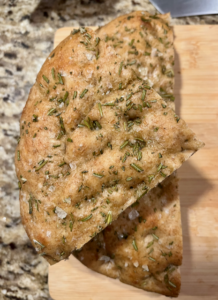 While my condemnation of processed foods may seem to be a critique of modernity, it certainly is not. Thanks to a modern, global market, I have food staples and ingredients available to me in my US home. One of these staples, Italian flour, allows me to enjoy bread, pizza, and a variety of dishes that rely on wheat flour. We purchase 5 kg sacks of Italian flour in the following three common varieties: Tipo 1 (relatively coarsely ground, darker, and richer in nutrients meant for rustic breads), Tipo 0 (medium fine grind, a great all-purpose flour), and Tipo 00 (finely ground, powdery meant for classic Neapolitan pizza, fresh pasta, and delicate pastries). Sure, it’s a bit more expensive than the typical American flours, but when used to make breads, pizza, and pasta at home, it’s far more economical than buying bakery bread made with flour we would never purchase. Here is a link to the Tipo 1 Flour that we use on Amazon.
My Favorite Focaccia Recipe
- Ingredients
650 grams flour — Italian Tipo 1 (you can use a combination of Tipo 1 and Tipo 0)
460 grams water (70.8%)
1 tablespoon salt
4 tablespoons olive oil
2.5 teaspoons dried yeast
1 tablespoon honey
Instructions
Add the honey, yeast, and 40 C water to a large bowl, then whisk to combine. Allow the yeast to bloom for 10 minutes. While waiting, measure the dry ingredients, flour, and salt. Once the yeast has bloomed, add the olive oil to the yeast slurry, followed by the flour and salt. Mix well by hand with a wooden spoon or silicon spatula. The dough should be uniform with no dry patches. Place the dough in a clean, oiled bowl. Rotate the dough ball in the bowl so the top is coated with oil. Cover with plastic wrap and let it rest on the counter for 30 minutes, then transfer the bowl to your refrigerator for 48 hours (give or take a few hours). Yes, that is 48 hours, which brings us to the second difference between American bread and European bread. Long fermentation times of 24 to 72 hours allow microorganisms to break down proteins and starches, making the bread easier to digest and lowering its glycemic index. It also enhances the flavor, creating complex secondary flavors not found in quick-fermented breads, and aids in a crisper crust. It also naturally extends the bread’s shelf life by altering the pH, making it more acidic.
Remove the dough bowl from the refrigerator and allow it reach room temperature for two hours. Grease your hands with oil. Uncover the bowl; with the dough still in the bowl, lift and fold the back edge of the dough from the underside, then bring it towards you in the center. Rotate the dough 45 degrees. Repeat the folding and rotating process 4 to 6 times until all the edges of the dough are folded into the center. Place dough in an oiled cast-iron pan (12-inch pan for this full recipe and a 9-inch pan for a half recipe). Cover with plastic wrap for one hour — the dough should rise, but it won’t be dramatic.
Oven at 450 (no convection) — top with roughly chopped rosemary — dimple the dough with your fingers, then drizzle with olive oil and sprinkle with flaky sea salt. Let the dough rest for 30 minutes. Bake for 21 to 25 minutes. Allow the bread to rest for at least one hour before cutting and eating.
Enjoy your homemade bread with:
Beer and Cheese Soup
Basil Pesto